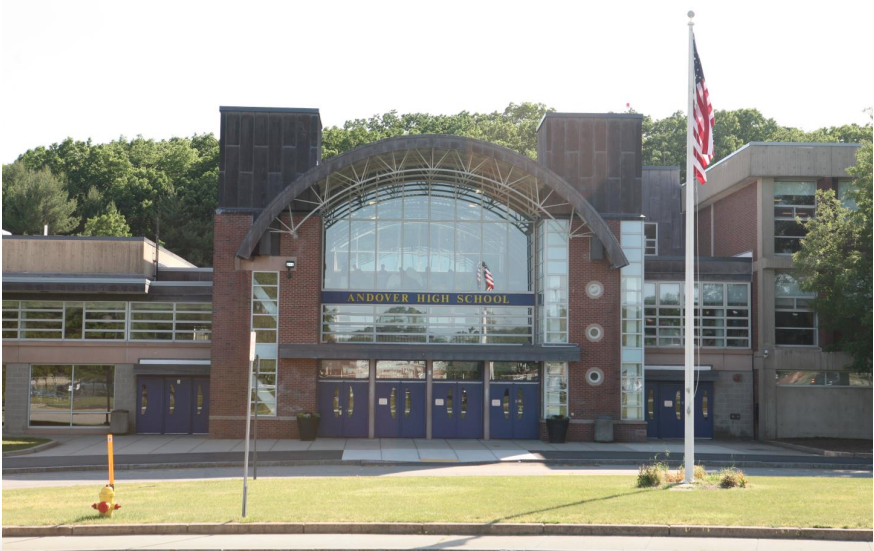
Andover High School senior Kevin Sun won a $10,000 prize at the world's largest pre-college science fair for inventing a dissolvable recycling tag. The 17-year-old's device could help sorting plants recover dark and colored plastics they currently send to landfills.
Sun took home the Craig R. Barrett Award for Innovation at the Regeneron International Science and Engineering Fair (Regeneron ISEF) in Phoenix in May, where he competed against more than 1,700 student researchers from more than 67 countries and territories, according to the Society for Science. He also earned a first-place award in the Materials Science category.
The problem he tackled is one most residents have encountered at the curb. Most sorting plants rely on near-infrared scanners to identify plastic types, but dark and colored plastics absorb that light, ScienceBlog.com reported. The scanners cannot read them.
Those containers end up in landfills or incinerators even when the plastic itself is recyclable.
Sun's fix is a chipless radio frequency identification (RFID) tag printed directly onto plastic using MXene, a highly conductive two-dimensional material first produced at Drexel University about a decade ago. The tag works like a wireless barcode, broadcasting the plastic's type to a scanner without needing line-of-sight contact. Because the tag encodes information in the physical shape of its printed pattern rather than a silicon chip and metal antenna, it avoids the cost and contamination problems of traditional RFID.
The tag is coated in polyvinyl alcohol (PVA), the same water-soluble material found in dissolvable detergent pods. Soak it in a 1 percent sodium hydroxide solution heated to 60 degrees Celsius, and both the tag and coating dissolve within three to five minutes. That alkaline hot-wash step already exists in most recycling plants, so no new equipment would be needed.
Sun's experiments showed the tag stayed readable for at least six weeks, roughly the shelf life needed between manufacturing and a recycling facility, according to the Society for Science award citation.
The work went beyond a science fair poster. Sun is the first-listed author on a peer-reviewed paper published April 1 in Advances in Industrial and Engineering Polymer Research. His co-authors include Rahul Bhattacharyya, director of MIT's Auto-ID Labs, whose research focuses on keeping tracking technology from contaminating the materials it tracks.
Sun was not the only Andover student to win at ISEF. Yaejoon Jung, 18, won a first-place award in Behavioral and Social Sciences, and Tina Jin, 15, won in Earth and Environmental Sciences, according to the same press release.
ScienceBlog.com noted a caveat: the study was conducted at lab scale on one type of plastic film. Getting a printed tag to survive months on a store shelf and wash off cleanly across different plastics under real plant conditions remains a longer road than one paper can cover.
The $10,000 Barrett Award is designated for post-secondary educational expenses. Sun is a member of Andover High's Class of 2027.