
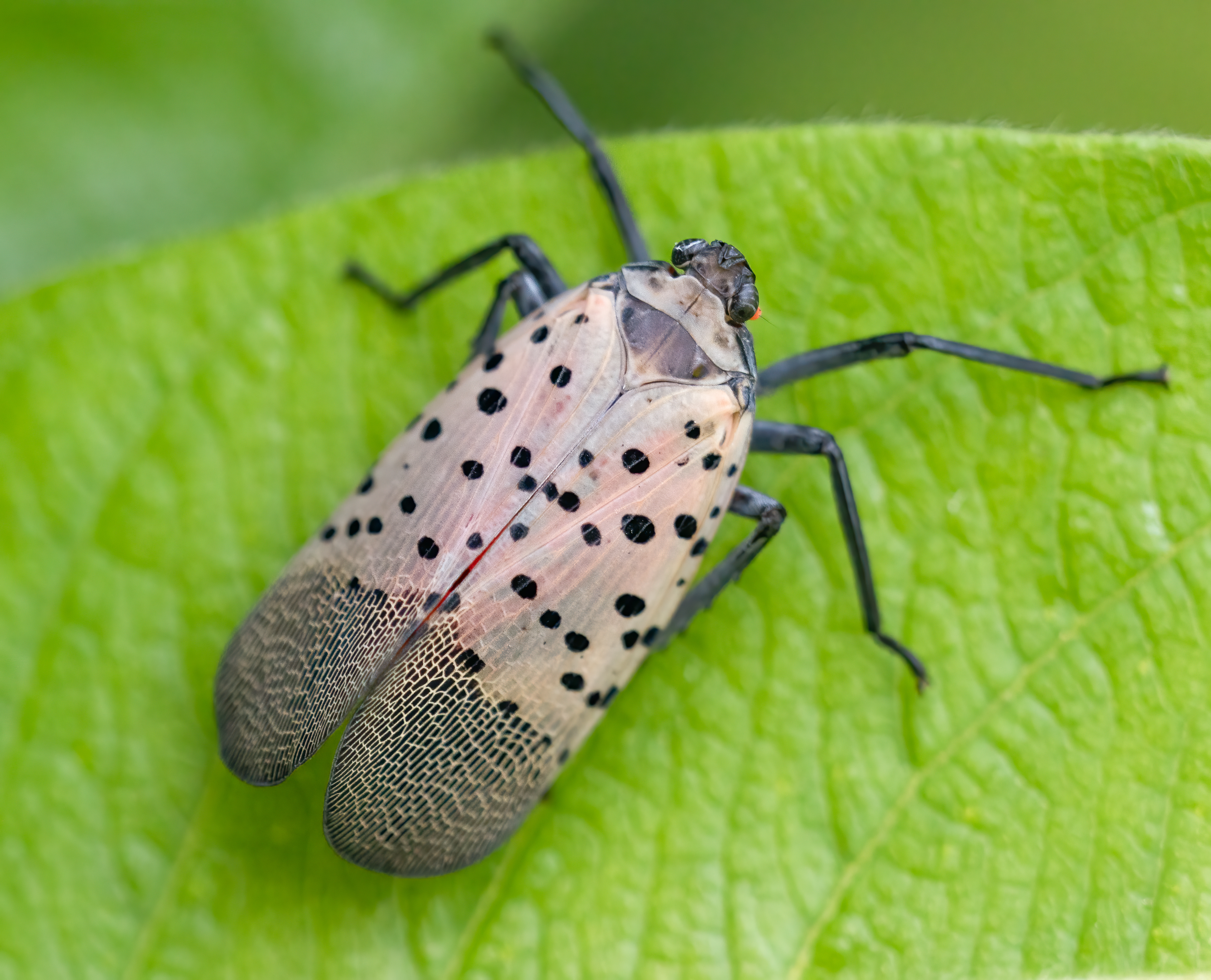
Andover's Conservation Division is urging residents to report spotted lanternfly sightings as the invasive insect's numbers grow across town.
The sap-feeding pest has been observed in Andover for some time, but the town has seen a growing number of sightings, according to the town's spotted lanternfly page. The Conservation Division is now mapping populations and asking residents to file reports through an online form or by calling 978-623-8630.
The insect does not bite or sting people or pets. But it feeds on the sap of more than 100 plant species, and large populations can weaken trees and vines by draining them repeatedly. Orchards, vineyards, nurseries and hardwood forests are all at risk, according to Andover WECAN, a local environmental organization that posted an alert Oct. 26.
Statewide, the problem is growing fast. Massachusetts confirmed its first spotted lanternfly infestation in Fitchburg in 2021. The state has now confirmed the insect in more than 170 cities and towns, according to WECAN. The Boston Globe reported Sept. 7 that the number had nearly tripled from more than 50 communities in August 2025.
"Massachusetts is just now getting to the point where there is such a heavy infestation of spotted lanternfly that the general public is starting to take notice," Jennifer Forman Orth, an environmental biologist with the Massachusetts Department of Agricultural Resources, told the Globe.
The state's strategy has focused on slowing the spread rather than eradication, Orth told the Globe.
What to look for
Adults are about an inch long with gray wings covered in black spots and a flash of red underneath. Egg masses look like smears of gray putty on trees, stones, vehicles and outdoor gear. Adults are active July through December. Egg masses can appear from fall into early summer, according to WECAN.
The insect is especially drawn to tree-of-heaven, itself an invasive species. It also targets grapevines and maple, apple and black walnut trees, the Globe reported.
What residents can do
Report it. File a sighting through the Conservation Division's online form or call 978-623-8630.
Destroy it. Stomp or squish adults and nymphs on sight. Scrape egg masses into a bag of rubbing alcohol or soapy water for at least 24 hours before removal.
Check before you travel. Spotted lanternflies hitchhike on cars, firewood, outdoor furniture and potted plants. Give those a look before moving them, WECAN advised.